
VPN for Traveling to Turkey: Wi-Fi Safety, Thai Banking and eSIM Tips
A practical, law-abiding guide to using a VPN in Turkey: safer airport, hotel and cafe Wi-Fi, reaching Thai banking and services, eSIM versus local SIM, and why you should check current official guidance.
10 min readUpdated Oct 18, 2026By XPASS Editorial Team

Turkey is a favourite for Thai travellers who want a mix of history, food and landscape: the mosques and bazaars of Istanbul, the Bosphorus ferries, the hot air balloons over Cappadocia, the beaches further south. Most trips are smooth. The digital side of a trip deserves the same planning as flights and hotels, though, because you will lean on your phone for maps, tickets, translation, payments and messages home.
This article looks at a VPN for traveling to Turkey as a practical safety tool: protecting yourself on shared Wi-Fi, keeping Thai banking and services usable from abroad, and choosing between an eSIM and a local SIM. It does not explain how to get around any restriction. Rules about online services exist in many countries, Turkey included, and they change over time, so the right habit is to follow local law and read current official guidance. If you are new to the idea, start with what a VPN is.
What to know about rules before you go
Most countries, Turkey among them, apply their own rules to online services and content. At various times, some websites and apps have been restricted or slowed down in Turkey, and reports of this appear in news coverage. We cannot tell you which services are affected today, how long any restriction will last, or how rules will be applied in your case. That is a decision for the Turkish authorities, and it can change without notice.
What you can do is simple and sensible.
- Read your own government's travel advisory for Turkey. Thai travellers can look at the information published by the Thai foreign ministry and the embassy, and other nationalities at their own foreign ministry.
- Read official Turkish government information for visitors, including anything about telecommunications and online conduct. Note the date on each page.
- Follow local law. A VPN is a security tool. It does not give you permission to do something that is not allowed, and it can make an already serious situation look worse.
- Do not rely on forum posts. What a stranger did last summer may be out of date or wrong.
Our general piece on whether VPNs are legal covers the wider picture, and the article on VPN use in the UAE shows the same careful approach for another destination. The rest of this article stays with everyday safety.

Why public Wi-Fi deserves care in Istanbul and beyond
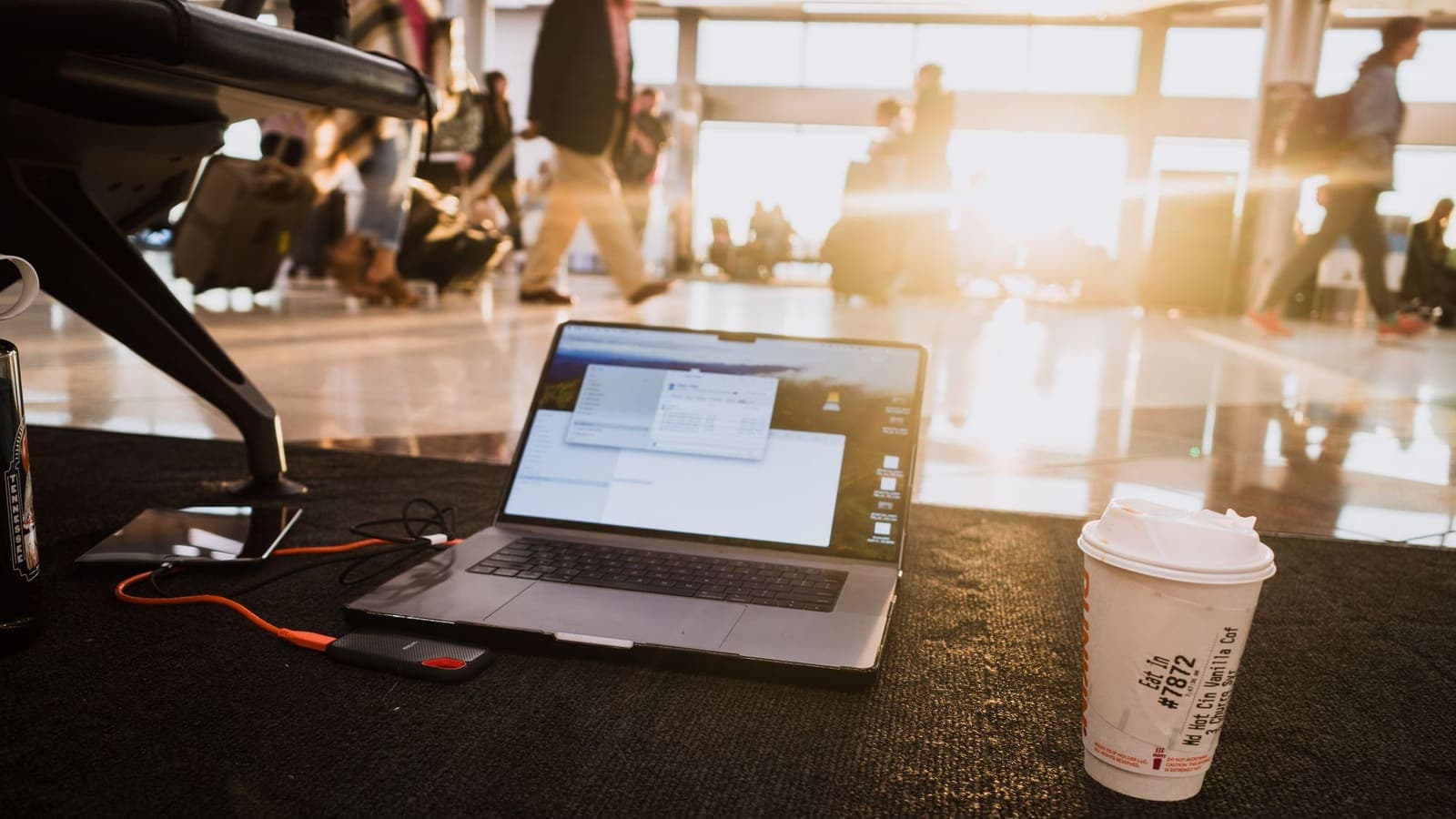
A trip to Turkey usually involves a lot of shared networks: the airport, a hotel lobby, a cafe near the Grand Bazaar, a ferry, a tour office, a restaurant with a free password on the menu. Each is convenient, and each is a network run by someone you do not know, shared with people you do not know.
The common risks are not exotic.
- Fake networks with familiar names. A hotspot called something almost the same as the cafe's name can be set up by anyone. If you join it, traffic passes through their equipment.
- Open networks. On a network with no password, other users may be able to watch unencrypted traffic. Most sites now use HTTPS, which protects the content, but not every app and not every page does.
- Fake login pages. Some public networks ask you to sign in on a splash page. A bad page can ask for far more than a name and email.
- Shoulder surfing and stolen devices. Crowded tourist areas make these just as likely as network attacks.
The US Federal Trade Commission explains the basics in its guidance on public Wi-Fi. A VPN helps with part of the problem: it encrypts traffic between your phone and the VPN server, so the person running the Wi-Fi sees much less. The Cloudflare explainer on VPNs describes how this works at a basic level. Our article on using a VPN on hotel Wi-Fi goes through the daily habits in more detail.
Practical steps before you fly
A calm checklist two or three weeks before departure beats solving problems at the airport.
- Update your phone and apps. Security fixes are the cheapest protection you have.
- Turn on two-factor authentication for email, banking, social media and cloud storage. Think about how you will receive codes abroad; see the SIM section below.
- Install and test any VPN app at home, on a network you trust. Sign in, connect, open a few pages and disconnect again, so you know what normal looks like.
- Save offline copies of flight tickets, hotel bookings, insurance details and maps. Take screenshots or use an offline map download.
- Tell your bank your travel dates and ask how to contact them from abroad. Check which method your bank app uses for approval codes.
- Set up a payment backup. Carry a second card kept separately from the first.
- Plan your data. Decide before departure whether you will use an eSIM, a local SIM, or roaming from your Thai carrier.
- Write down your boundaries. If you would not do something without a VPN, a VPN is not a reason to start doing it.
A plain example: one week in Istanbul and Cappadocia
Nok flies from Bangkok to Istanbul for a week, then takes a short domestic flight to Cappadocia. Before leaving she updates her phone, installs her bank's app on the phone she will carry and checks that she can sign in. She turns on two-factor authentication for her email and tells her bank her travel dates.
At Istanbul airport she skips the free Wi-Fi for anything involving money and uses mobile data from her travel eSIM to check a transfer. At the hotel she connects to the network named on the card at the front desk, not one that merely looks similar, and she turns on her VPN app before opening email. In a cafe, a banking app asks for extra verification because she is logging in from a new country. She does not fight the check. She approves it with her usual method, and when one app will not open she waits and tries again on mobile data instead of forcing it. In Cappadocia she downloads offline maps because mobile coverage in valleys can be patchy.
None of this involved anything clever. Her VPN was one layer, used for a clear security reason, alongside updates, two-factor authentication and common sense.
Thai banking and services from abroad
Many Thai travellers want to check a bank balance, pay a bill, receive an OTP or open a government or insurance app while overseas. A few points help.
- Expect extra checks. Banks look at where a login comes from. A first login from Turkey may trigger a verification step, whether or not you use a VPN.
- Know how your OTP arrives. Many Thai services send OTP codes by SMS to your Thai number. If your Thai SIM is not active abroad, you will not receive them. Options include keeping roaming available for messages, using an app-based approval from your bank, or an eSIM that lets you keep your Thai SIM active for messages (see below).
- A VPN can add friction. Banking apps sometimes treat a VPN connection as unusual. If that happens, disconnect on a trusted network, complete the task and reconnect. Do not repeat failed logins, since that can lock the account.
- Use official channels. If you are locked out, contact the bank through its official app or the number on the back of your card, not a number from a message or search result.
Our articles on using Thai websites and apps while abroad and using banking apps with a VPN cover this in more depth, and eSIMonline has a guide to receiving SMS OTP while abroad.
eSIM or local SIM in Turkey
Mobile data is the safest way to do sensitive tasks, because you are not sharing a radio network with strangers. You have three common choices.
| Option | Good for | Watch for |
|---|---|---|
| Travel eSIM | Short and medium trips; setting up before you fly; keeping your Thai SIM for OTP | Your phone must support eSIM and not be carrier-locked; install before departure |
| Local physical SIM | Long stays and heavy use | Queues at the airport; ID requirements; possible phone registration rules |
| Thai carrier roaming | Convenience for short trips | Cost can be high; check the daily pass terms |
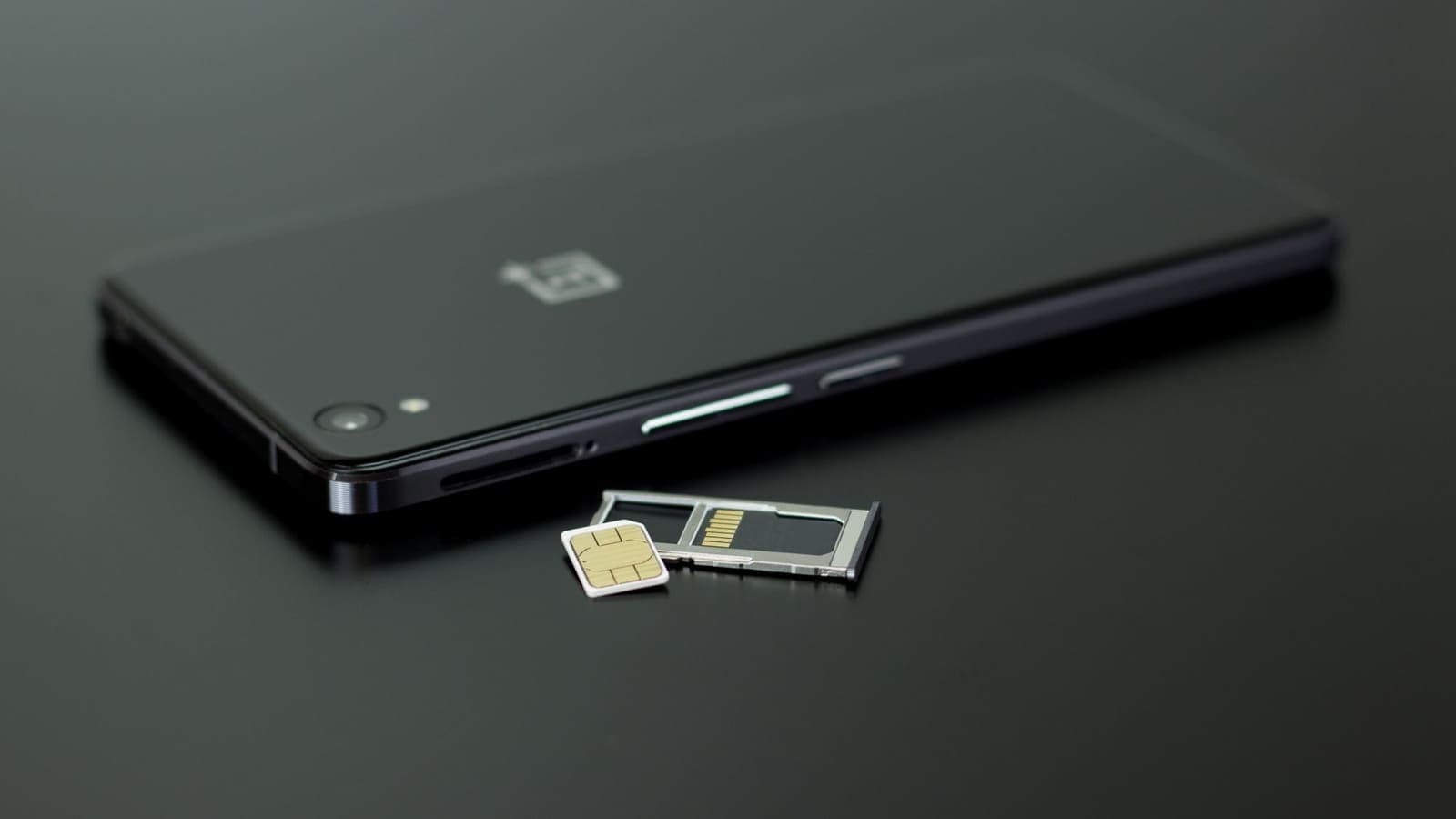
An eSIM is a SIM profile you install by scanning a QR code or entering an activation code, with no plastic card. Most modern phones keep your Thai SIM active in one slot while the eSIM handles data in the other, which means OTP messages to your Thai number can still arrive. The setting names vary by phone and software version, so look for wording such as "cellular data" or "dual SIM" in your settings. If you want to see whether your model works, eSIMonline's list of eSIM phones is a good place to check, and it sells a Turkey travel eSIM if that suits your trip. Install it before you leave, while you are on a reliable connection. We cover the wider picture in VPN and eSIM for travel.
Registering phones on long stays
Some countries require phones brought in from abroad to be registered with local authorities, especially if you use a local SIM for longer than a short visit. Turkey may have rules of this kind. We cannot tell you the current deadline, the fee, or whether it applies to short tourist stays. If you plan to live, work or study there for weeks or months, check the official guidance from the Turkish authorities before you go, and ask your university or employer, who often know the process well. An eSIM bought for a short trip is usually simpler, but do not assume it removes any rule that applies to you.

When a VPN helps, and when it does not
A VPN is useful for one specific layer of protection. It is not a general safety switch.
| Situation | Does a VPN help? | What else to do |
|---|---|---|
| Open Wi-Fi at the airport or a cafe | Yes, it limits what others on the network can see | Prefer mobile data for banking; check network names |
| Hotel Wi-Fi shared by many guests | Yes, for the same reason | Confirm the exact network name with the front desk |
| A phishing SMS or fake delivery notice | No | Do not tap links; use official apps |
| A stolen or lost phone | No | Screen lock, remote wipe, a second device for recovery |
| A weak or reused password | No | Password manager, two-factor authentication |
| A restriction on a specific site or app | No promise either way | Follow local law and official guidance |
A VPN also cannot make you anonymous. Accounts, payment details and device identifiers still identify you; can a VPN make you anonymous explains why. Treat it as one tool among several.
Limits and what to watch for
Be realistic about the following.
- A VPN does not change the law. Anything that is not allowed without a VPN is still not allowed with one.
- No guarantee of access. Networks, operators and services can limit VPN connections at any time, and no VPN can promise that a given site or app will load.
- Apps may behave differently. Banking, payment and streaming apps may ask for extra verification or refuse to run while a VPN is on. That is normal and not a fault in your phone.
- Public charging and shared computers. Avoid logging in to important accounts on hotel business-centre computers, and be careful with public USB charging points. A power bank is safer.
- Scams are not a network problem. Fake taxi quotes, fake tour offers and phishing messages succeed because someone is persuaded, not because Wi-Fi was unsafe.
- Keep your reasons ordinary. If your reason for using a VPN is protecting a connection, you are on solid ground. If you cannot explain your reason plainly, rethink it.
How XPASS fits a short trip
XPASS sells prepaid VPN passes for a fixed number of days, paid once by card with no automatic renewal. After payment, your login details appear on your My Pass page and you sign in to the free VPNclient app with that username and password. The pass starts when the VPN account is created, not at first connection, so buy it close to your departure date but early enough to test at home. If you need more days, renewing adds them on top of any time left. None of this changes the legal position: it only describes how the product works, and you remain responsible for how you use it. When you are packing, the travel use page gives a short overview.
Summary
For a trip to Istanbul, Cappadocia or anywhere else in Turkey, treat a VPN as a safety layer for shared Wi-Fi, not as a way around rules. Read current official guidance before you go, since some sites and apps have been restricted at times and rules change. Update your devices, turn on two-factor authentication, tell your bank your dates, and plan how OTP codes will reach you, ideally with an eSIM for data and your Thai SIM kept for messages. Check official rules if you plan a long stay, since registering imported phones may be required. Use mobile data for sensitive tasks, and keep your reasons for using a VPN plain and lawful.
If a simple prepaid option fits your trip, you can look at the pricing page when you are ready.
Frequently asked questions
Is it legal to use a VPN in Turkey?
There is no single answer that fits every situation. Rules on online services exist in Turkey and they change, so read current official Turkish government information and your own country's travel advisory before you go. A VPN does not change what is lawful, and this article is general information, not legal advice.
Will a VPN make airport and hotel Wi-Fi safe in Istanbul?
A VPN encrypts traffic between your phone and the VPN server, which reduces what other people on the same Wi-Fi can see. It does not stop phishing, fake login pages or weak passwords, so keep two-factor authentication and software updates in place as well.
Should I use an eSIM or a local SIM in Turkey?
An eSIM is easy to set up before you fly and keeps your Thai SIM in place for OTP messages. A local SIM can suit long stays, but rules about registering phones may apply, so check official guidance. Many travellers combine an eSIM for data with their Thai SIM for messages.
Do I need to register my phone if I stay in Turkey for a long time?
Some countries require phones brought in from abroad to be registered after a certain period, and Turkey may have such a rule. Details, deadlines and fees change, so check the official Turkish authorities' guidance before a long stay rather than relying on this article.
Can I still use Thai banking apps from Turkey?
Often yes, but banking apps run security checks and may ask for extra verification when you log in from a new country. Tell your bank your travel dates, keep your SMS or authenticator method ready, and contact the bank through its official app or the number on your card if you are locked out.
References
About the author

Bob Kanokphon Thongdee
- Founder of XPASS VPN
- Co-founder of eSIMonline.asia
- More than 7 years in online marketing
- Founder of Cojourney Visa and Cojourney Travel
Need a VPN for a short trip or a busy month?
XPASS sells prepaid passes for a set number of days. You pay once and nothing renews automatically.
See passesKeep reading
VPN Basics
Are VPNs Legal? What to Know Before You Connect
In many places using a VPN is lawful, but the rules differ from country to country, and a VPN never makes an illegal act legal. Here is how to think about it.
9 min read

VPN Security
How to Use a VPN on Hotel Wi-Fi Safely
Hotel and travel Wi-Fi is shared with strangers and often hides behind a login page. This guide explains how to connect, when the VPN goes on and what to do when it will not connect.
9 min read

Privacy Guides
VPN Use in the UAE: Rules and Practical Considerations
A cautious look at using a VPN when you travel to or live in the UAE: why regulation varies, what penalties people report, which official sources to read and how to use a VPN only lawfully.
10 min read

Privacy Guides
Using Thai Websites and Apps While Abroad
Thai banking apps, TV platforms and government sites often treat connections from abroad differently. This guide explains why, what to try with the service first, and the honest limits of a VPN.
9 min read
Privacy Guides
Travel eSIM vs VPN: Different Jobs Explained
A travel eSIM and a VPN are often mentioned together, but one supplies connectivity and the other protects it. Here is how each works and how they fit into one trip.
9 min read