
Travel Router VPN Setup for Hotels
How to prepare a pocket router at home, join hotel Wi-Fi or Ethernet, get past the login page and confirm that the VPN is really carrying your traffic.
9 min readUpdated Oct 15, 2026By XPASS Editorial Team
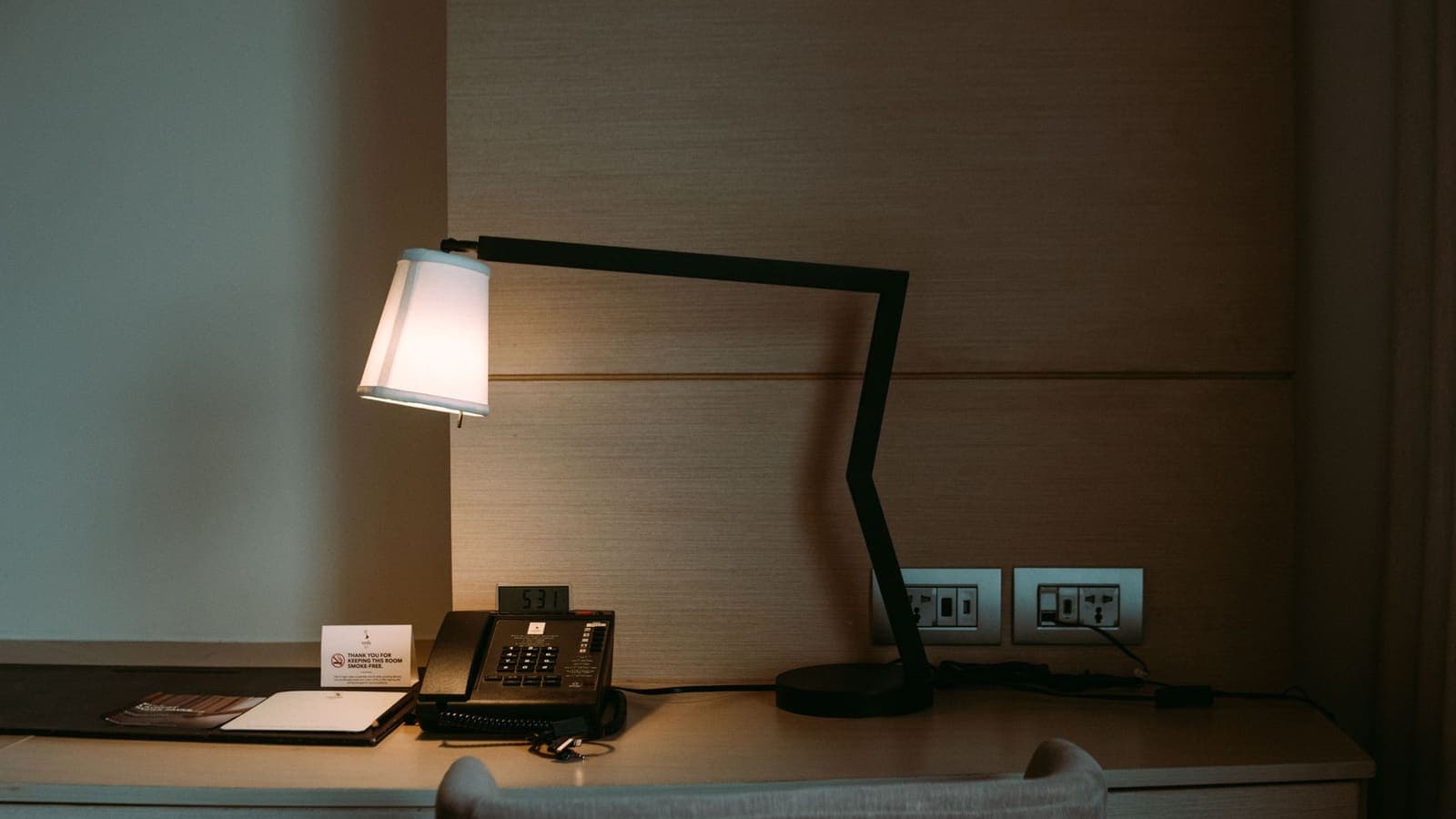
A phone or laptop with a VPN app is easy to protect in a hotel. The harder case is everything else you travel with: the tablet your child uses, a streaming stick, an e-reader, a handheld console, a second laptop used for work. A small travel router lets you put all of them behind one protected network, and this article is a practical travel router VPN setup guide for hotel stays, written as a procedure you can follow before and during the trip.
It does not repeat the general overview of what these gadgets are, which you can find in the article on the VPN travel router. Here the focus is the order of operations: what to configure at home, what to do at the hotel desk, how to pass the login page, how to confirm the VPN is working and what to do when it is not.
What a travel router setup actually changes
When you join hotel Wi-Fi with a phone, the phone talks directly to the hotel network. Everyone else on that network is a neighbour, and the hotel can see which sites you connect to. With a travel router in between, the picture changes.
- The router is the only device that talks to the hotel network. Your own devices join the router's private Wi-Fi network, which only you use.
- The router can run the VPN client. Everything that leaves the room is then wrapped in the VPN tunnel before it reaches the hotel network.
- Your devices keep the same Wi-Fi name and password from trip to trip, so you do not re-enter credentials in every hotel.
- The hotel sees one device, not six, which can matter when a hotel limits how many devices each room may register.
That last point needs a caution. A hotel's terms may restrict extra access points. Read the Wi-Fi conditions on the card in the room, or ask the front desk, and follow what they say. This article assumes you are allowed to connect your own router.
It also helps to be clear about what a router VPN does not do. It encrypts traffic between the router and the VPN server. It does not fix weak passwords, it does not make a phishing page honest, and it does not protect a device while that device is on another network. The what a VPN cannot protect you from article lists these limits in full.
Before the trip: prepare the router at home
Almost every failed hotel setup comes from doing the configuration in the hotel. At home you have a stable connection, the manual, a cup of tea and no deadline. Treat this as a checklist.
- Update the firmware. Do this on your home network, not in the hotel. A fresh update at home also tells you whether the new version still works with your VPN settings.
- Change the default administrator password. The admin page of a travel router is reachable from its own Wi-Fi network. Use a long, unique password and keep it in your password manager.
- Set a private Wi-Fi name and password. Choose a name that is clearly yours and a strong passphrase. Do not use your name or room number.
- Check that your router can act as a VPN client. Some small routers only run a VPN server. Look for a "VPN client" page. Your My Pass page shows the connection methods available for your account, so confirm that the router firmware supports one of them before you rely on it. Our guide on setting up a VPN on a router covers the general steps.
- Enter and test the VPN login at home. Use your VPN username and password from the My Pass page. Connect, load an IP-check page, confirm the address has changed, then disconnect.
- Pick a LAN address range that is unlikely to clash. Many hotels use
192.168.0.xor192.168.1.x. If your router also uses one of those, the two networks collide and nothing loads. Move the router's own network to something less common such as10.77.0.x. The ranges that private networks use are defined in RFC 1918. - Turn on the kill switch or firewall rule if the firmware offers one, so traffic cannot leave the router unprotected when the tunnel drops. The article on a router VPN kill switch explains the idea.
- Pack the extras. A short Ethernet cable, a USB power adapter you trust, and a note with the admin address and the router's default recovery steps.
Write the settings you changed on a single page. In a hotel with poor reception, you will be glad not to search for them.
Choosing the uplink: Ethernet, Wi-Fi or USB
The "uplink" is how the router reaches the hotel's internet. Most travel routers support three, and each suits a different room.
| Uplink | How it works | Best for | Watch out for |
|---|---|---|---|
| Ethernet port in the room | Cable from the wall to the router's WAN port | Rooms with a desk socket, long stays | Socket may be disabled or tied to one device until you pass the login page |
| Wi-Fi as WAN (repeater or client mode) | Router joins the hotel Wi-Fi like a phone would | Most hotels, short stays | Weak signal in the room; login page must be passed through the router |
| USB tethering from a phone | Phone shares its mobile data to the router over a cable | Poor hotel Wi-Fi, risky networks | Uses your data plan; drains the phone battery |
Ethernet is usually the most stable, because the signal does not have to cross walls. If the room has a wired socket, try it first. Wi-Fi as WAN is the common fallback, and it is the mode most people mean by "travel router". USB tethering is a good emergency option when the hotel network refuses to cooperate, and you can read more about mobile sharing in the guide on sharing a VPN over a hotspot.
Step by step: connecting at the hotel
Once in the room, work in this order. Doing the steps out of order is the cause of most "I have Wi-Fi but no internet" complaints.
- Plug in the router and wait for it to start fully. Give it a couple of minutes. Many routers show a solid light when ready.
- Connect one device, ideally a laptop, to the router's own Wi-Fi. Use the private name you set at home. Do not connect the whole family yet.
- Open the router's admin page in a browser at the address in your notes. Log in with your administrator password.
- Choose the uplink. For Wi-Fi as WAN, scan for networks, pick the hotel network and enter the hotel password if it has one. For Ethernet, plug the cable into the WAN port and select cable mode.
- Wait until the router reports it has an address from the hotel. If it does, the uplink is working, even if web pages do not yet load. That is normal; the login page is next.
- Pass the hotel login page (next section). Do this before turning the VPN on.
- Confirm plain internet works. Load a page without the VPN. If it does not load, fix the uplink first; the VPN adds more variables, not fewer.
- Turn on the VPN client from the router's VPN page.
- Test the result (see the section on checking). Only then connect the other devices.
The discipline of testing without the VPN first and then with it saves a lot of confusion, because each step proves one thing.
Captive portals and room-number logins
A captive portal is the page that appears when you first join a hotel network and asks for a room number, surname, voucher code or a click on "Accept". The hotel network usually remembers your device by its hardware address, and a travel router is a new device with a different one.
What works in most cases:
- Connect a laptop to the router, not to the hotel Wi-Fi, and open any plain web address. Use an address that starts with
http://so the redirect can happen. If the page does not appear, try the addressneverssl.comstyle test pages or the router's own status page, which often triggers the redirect. - Enter the room details once. After you accept, the hotel marks the router as authorised, and every device behind it benefits.
- Do the login before the VPN is on. The portal lives on the hotel's own network and cannot be reached through a tunnel that has not yet been allowed to exit.
- Watch the clock. Some hotels expire the session every 24 hours, or when the device goes quiet. If the internet suddenly stops, open a browser and look for the login page again.
- Some routers have a clone option. It lets the router copy the hardware address of a device that the hotel already authorised. Use this only if the hotel allows it and the portal refuses to accept the router otherwise.
The help article on captive portals that block a VPN goes deeper into why portals and tunnels interfere with each other.
Starting the VPN and checking that it works
After the plain internet works, switch on the VPN client. Give it a few seconds to connect. Then check three things on a device behind the router.
- Public IP address. Visit an IP-check site. The address should no longer be the hotel's. If it still is, the tunnel is not carrying traffic.
- DNS. Some routers keep using the hotel's DNS servers even when the tunnel is up, so name lookups can still leak. Set a trusted DNS on the router if the firmware allows it, then repeat a DNS leak test. The article on how to test a VPN walks through the checks.
- Failure behaviour. Briefly disable the VPN on the router and see whether devices lose internet. If they do, your kill switch rule is working. If they keep loading pages, the router is leaking when the tunnel drops.
Run these checks on the first evening, not the last. If something is wrong you want a day or two to fix it.
Three hotel scenarios
The family room. Arun travels with two children and a partner. The kids use a tablet and a handheld console that cannot run a VPN app. He plugs the router into the desk socket, passes the portal with the room number and runs the VPN on the router. Everyone joins the same private Wi-Fi name. The only adult who still needs an app is his partner's work laptop, because the company requires its own corporate VPN, so that laptop uses a split arrangement: the router tunnel for general traffic and the company client on top only when needed. If that stacking causes trouble, they disable the router VPN on that evening and use only the company client.
The weak-signal room. Lin stays on the far corner of a long corridor, and the hotel Wi-Fi is faint in her room. The router in repeater mode gets a poor link and keeps dropping. She moves the router to the window, on a wall nearer the access point, and powers it from a power bank. When that is not enough, she plugs her phone into the router with a cable, switches the uplink to USB tethering and keeps working on mobile data for important calls.
The conference week. Marcus attends a conference where the hotel Wi-Fi is overloaded. The router connects but speeds are inconsistent. He checks whether the slowness is the hotel or the VPN by running a speed test with the VPN off and then on. The numbers show that the hotel uplink itself is slow, so the VPN is not the cause. He schedules large downloads for early morning and accepts slower speeds during the day. The article on why internet speed changes with a VPN explains what is normal.
Troubleshooting a travel router at the hotel
Work from the bottom up: the physical link, then the network address, then the login page, then the VPN.
| Symptom | Likely cause | What to try |
|---|---|---|
| Router connects to hotel Wi-Fi but no pages load | Login page not passed | Open a plain http:// address from a device behind the router and complete the portal |
| Nothing loads, router has no address | Address clash or weak signal | Change the router's LAN range; move it nearer the window or the socket |
| Internet works, VPN will not connect | Hotel is restricting some traffic | Check the credentials, try again on mobile tethering to isolate the cause |
| VPN connects but pages do not load | DNS or MTU issue | Set a different DNS on the router; lower the MTU value slightly |
| Everything slow | Crowded hotel link or distant server | Run a test with VPN off, then choose a nearer location in the router client |
| Worked yesterday, fails today | Portal session expired | Open a browser and sign in again |
| One device cannot reach the printer or casting target | Router isolates clients | Turn off client isolation on the private Wi-Fi |
If nothing works after these steps, use the fallback you prepared: the laptop or phone app on its own, or USB tethering. The article on using a VPN on hotel Wi-Fi covers the device-level approach.
Limits and common mistakes
- Configuring in the hotel. The first time is the slowest; do it at home.
- Two VPNs at once. A tunnel on the router plus an app on the laptop doubles overhead and hides the source of problems.
- Skipping the kill switch. Without it, the router may quietly send traffic in the clear when the tunnel drops.
- Leaving the default admin password. On a shared network, other guests may reach the admin page of an unprotected router.
- Assuming the router protects devices outside the room. The moment a phone leaves the hotel, it is on its own.
- Ignoring hotel terms. Some properties restrict extra access points; ask first.
- Expecting speed from a small router. Pocket routers have modest processors, and VPN encryption can be the slowest part of the chain.
- Trusting the router for everything. A phishing link is just as dangerous behind a router. See how to recognize phishing websites.
NIST's guidance on IPsec VPNs and the FTC's advice on public Wi-Fi both make the same basic point: protect the link you do not control, and keep the rest of your security habits in place.
Summary
A good travel router VPN setup is mostly preparation. Update the firmware and set a strong admin password at home, move the router's address range away from common hotel ranges, test the VPN login before you leave, and pack an Ethernet cable. At the hotel, join the uplink, pass the login page first, confirm plain internet, then switch on the VPN and test the address, DNS and kill switch. Keep a fallback ready, and remember the router only protects devices connected to it.
If you want a free app to use alongside or instead of a router, see the download page, and compare short prepaid options on the pricing page when you plan your next trip.
Frequently asked questions
Do I need a travel router if I already have a VPN app on my phone and laptop?
Not necessarily. Apps cover the devices they are installed on. A travel router becomes useful when you carry devices that cannot run a VPN app, such as a streaming stick, an e-reader or a smart speaker, or when you want every device in the room to join one network that you control.
Why does my travel router not get internet at the hotel even though the Wi-Fi works on my phone?
Most hotels put a login page in front of the connection and remember the device by its hardware address. The router is a new device and must pass that page itself, usually by opening a browser on a laptop connected to the router and entering the room number and surname.
Should the VPN run on the router or on each device?
Pick one layer for each device. Running the VPN on the router and again inside an app on a laptop stacks two tunnels, slows things down and makes problems harder to trace. Use the router for the whole room, or apps for single devices, not both by default.
Is a travel router a legal issue in hotels?
Hotels set their own terms for what you may plug in or connect, and some forbid extra access points. Read the Wi-Fi terms or ask the front desk. This is general information, not legal advice.
What should I do if the router loses the VPN halfway through the evening?
A kill switch or firewall rule on the router should stop traffic from leaving unprotected. Reconnect the VPN from the router page, check that the hotel login has not expired, and only then let devices use the network again.
References
About the author

Bob Kanokphon Thongdee
- Founder of XPASS VPN
- Co-founder of eSIMonline.asia
- More than 7 years in online marketing
- Founder of Cojourney Visa and Cojourney Travel
Need a VPN for a short trip or a busy month?
XPASS sells prepaid passes for a set number of days. You pay once and nothing renews automatically.
See passesKeep reading

Device Guides
Travel VPN Router: Setup and Use Cases
A pocket router can put a whole hotel room behind one VPN connection. This guide covers when a vpn travel router makes sense, how to prepare it and where it falls short.
10 min read

VPN Security
How to Use a VPN on Hotel Wi-Fi Safely
Hotel and travel Wi-Fi is shared with strangers and often hides behind a login page. This guide explains how to connect, when the VPN goes on and what to do when it will not connect.
9 min read

Troubleshooting
VPN Problems with Hotel and Airport Wi-Fi Login Pages
Hotel, airport and cafe Wi-Fi often needs a web login before anything works, and that can trap a VPN. Here is the order of steps, and fixes when the page will not show.
9 min read

Device Guides
How to Prevent Leaks When a Router VPN Disconnects
A phone app can warn you when the tunnel drops. A router cannot. This guide explains the vpn router kill switch idea, how to make the router fail closed, and how to test it.
10 min read

Device Guides
How to Set Up a VPN on a Router
A general, firmware-neutral guide to running a VPN on your router: what to check first, the usual setup steps, DNS and kill switch settings, travel routers and common fixes.
7 min read