
Shopping, Paying Bills and Topping Up for Thailand From Abroad
Buying from Thai shops, paying bills or topping up while you are abroad often triggers declined cards, missing OTP texts and security checks. Here is why, and what actually helps.
10 min readUpdated Oct 15, 2026By XPASS Editorial Team
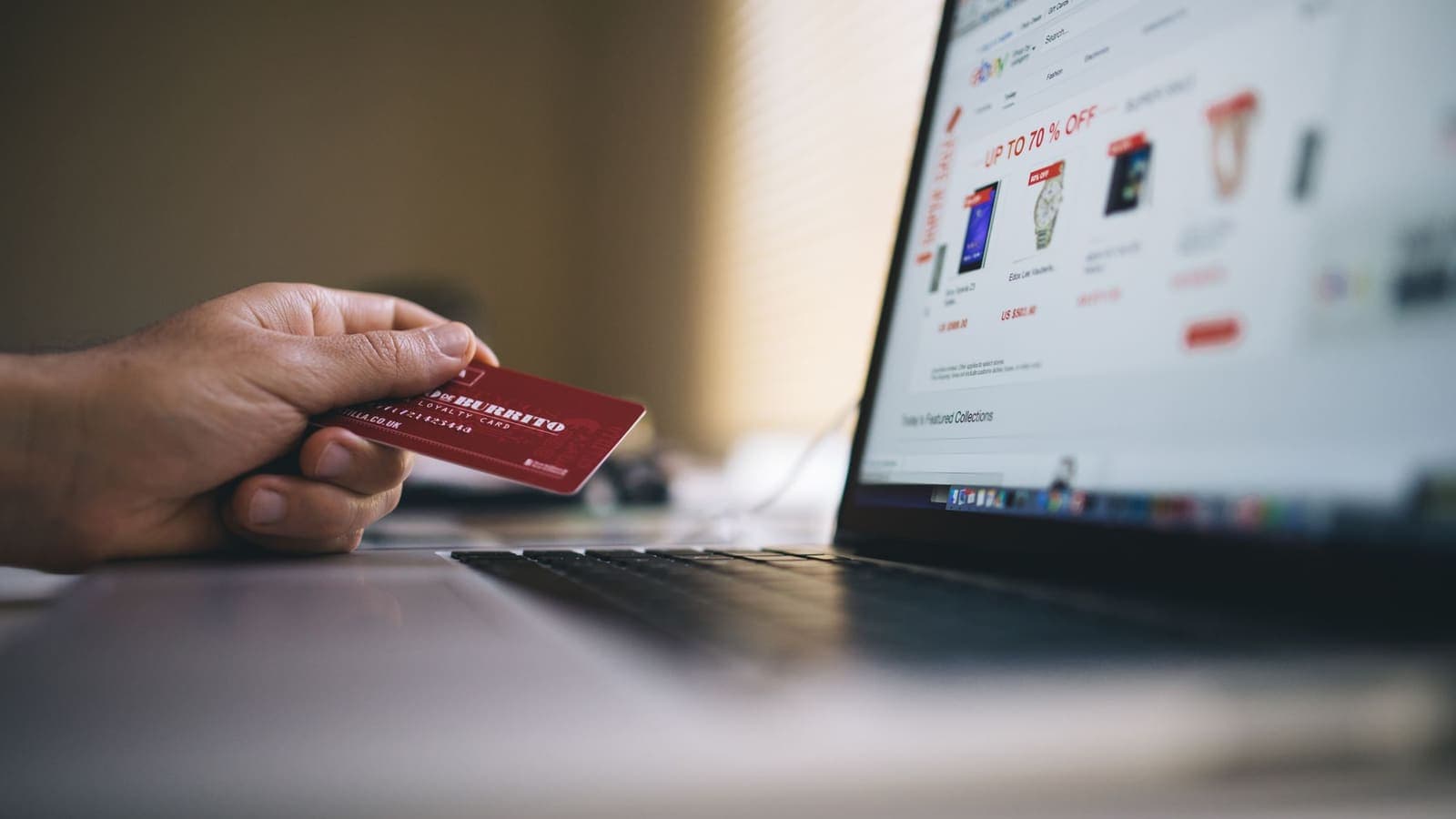
Imagine you are on a trip, or living abroad for work, and you need to buy something from a Thai online shop, pay an electricity or phone bill, or top up a mobile number for your family. You enter your card details and the payment fails. Or the page says a code has been sent, but the SMS never arrives. Or the site stops you with a security check that asks you to prove you are a person. None of this means your card is broken or your account has been hacked. It usually means that several automated safety systems have noticed that something about this purchase looks different from your normal pattern.
This article explains why those systems react, what you can do before and during a trip to make your own payments go through, and where a VPN fits in. The honest answer on VPNs is mixed: for your own accounts, connecting through a location in your home country can sometimes reduce false alarms, and in other cases it can make checks worse. If you want the general picture of VPNs and checkout security, read VPN and online shopping first. That article covers price myths and checkout habits. This one focuses on a narrower problem: buying from, and paying into, Thai services while you are physically somewhere else.
Why payments get flagged when you are abroad
Banks and card issuers handle millions of payments every day, so they rely on automated fraud rules. The exact rules are private and differ from one issuer to another, so nobody outside can describe them precisely. What is widely true is that the systems compare a payment with what is normal for you. Typical signals include:
- Where the payment appears to come from. A card that is nearly always used in Thailand suddenly makes a purchase from a different country.
- The device and browser. A new phone, a new browser profile, or a hotel computer is less familiar than your own phone.
- The network. A hotel, airport or coworking network is shared and unfamiliar. Some networks have been used for fraud before, and the system may be cautious about them.
- The type and size of purchase. A large first order, gift cards, mobile top-ups and digital goods are popular with fraudsters, so they are often watched more closely.
- Speed and repetition. Several attempts in a short time, or several small payments one after another, look like card testing.
- Mismatched details. A billing address in one country, a delivery address in another, and a connection from a third.
If enough of these signals add up, the issuer may hold the payment, ask for extra verification, or decline it and sometimes temporarily restrict the card. This is the system working as designed. It cannot tell the difference between you, a tired traveller, and someone who stole your card number, so it errs on the side of caution.
Two details are worth knowing. First, the shop and the card issuer are separate. A shop can run its own checks and refuse an order even when your bank would have approved it, and the reverse is also possible. Second, a decline message is often vague on purpose. It may only say that the payment could not be completed. Do not assume the cause. Check your banking app for alerts or messages before you try again.
Before you leave: travel notices and card settings
The best time to fix these problems is before you board. A few minutes of preparation prevents most of the stress.
- Look for a travel or foreign-use setting. Many issuers let you tell them your travel dates or switch overseas and online use on or off inside their official app. Not every issuer has this, and the names differ, so look in the card settings of your own app or ask the issuer. If you cannot find one, contact the issuer through the number printed on the card or the official app, not through a number from a message.
- Check what is switched on for online payments. Some cards have separate controls for online purchases, overseas use, contactless use and cash withdrawals. A control that was left off months ago is a classic reason for a decline.
- Keep the contact details up to date. The issuer should have your current mobile number and email. Verification codes go to those details.
- Check the transaction limits. Daily online limits can be low by default. If you plan a larger purchase, find out whether the limit can be raised, and for how long.
- Carry a backup payment method. A second card from a different issuer, or a different type of payment, means one decline does not stop you.
- Save the official support channels offline. Keep the in-app contact path and the number from the back of your card in a note that you can read without the internet.
A travel notice does not guarantee that a payment will always pass. It only gives the issuer one more piece of context. Treat it as helpful, not as a promise.
When the OTP SMS does not arrive
A one-time password, or OTP, is a short code that confirms a payment or a sign-in. In Thailand many banks and services still send OTP codes by SMS to the mobile number on file. That is convenient at home, and it becomes the most common point of failure abroad. The cause is almost always in the phone or the mobile network, not the shop.
If you keep your Thai SIM and use roaming. The message can arrive only if the phone is registered on a network that can deliver SMS. Check that the SIM is active, that roaming is allowed in the settings, and that your plan or package includes receiving messages abroad. Plans differ, and fees may apply, so check with your mobile operator before you travel. The related article on VPN and roaming explains how data and roaming interact.
If you swap to a local SIM or eSIM. Your Thai number is now inactive in the phone, so the code goes to a SIM that is not in use. A common solution is a phone with two SIM slots, or one physical SIM and one eSIM, so the Thai number stays reachable while the local data plan handles internet. A VPN does not change any of this. Our article on using a VPN with a travel eSIM covers the setup side.
If you have a Wi-Fi calling option. Some operators support calls and messages over Wi-Fi. Availability depends on the operator and phone, so ask your provider rather than assuming.
If the message is delayed. Wait a few minutes before you press resend. Many resends can create several codes, and only the latest one may be valid. Do not forward a code to anyone. A genuine bank or shop will never ask you to read it out.
If you cannot receive SMS at all. Contact the bank or service and ask whether they can verify you through their official app, a passkey, or another method. Do not change the registered number through a link that was sent to you by message. Do it from the official app or website, and expect additional identity checks. Standards bodies such as NIST treat SMS codes as a weaker option compared with an authenticator app or a hardware key, so moving to a stronger method is worth considering when the provider offers one. Our guide to two-factor authentication describes the choices.
A VPN is not a solution to any of the cases above. A VPN changes the route of your internet traffic. It does not change which phone number receives a text message.
Foreign IP, hotel network and security checks
Websites do not see your passport or your GPS. What they see first is the IP address of the network you are using. A public IP address can be looked up in databases that estimate a country and sometimes a city, as explained in what a public IP address is. Those estimates can be wrong, but a Thai shop that sees a foreign address on an account that always signs in from Thailand may react.
Typical reactions are:
- showing a CAPTCHA or "verify you are human" page;
- asking you to sign in again or confirm by email;
- requiring an extra OTP;
- limiting some payment methods or blocking checkout;
- sending a notification that a new sign-in was detected.
A hotel, airport or café network can add to this. Many guests share a small number of public addresses, and a single address may carry traffic from dozens of people at once. If some of those people behave badly, the address can be marked as risky for everyone on it. The same can happen with mobile networks that put many customers behind one shared address. For that reason, a security check on a hotel network does not mean that you did anything wrong. A different network, such as your own mobile data, may produce a lighter check. For details on shared hotel networks, see using a VPN on hotel Wi-Fi.
Some services also combine the network signal with other information, for example the device language, time zone, and cookies. Shops generally decide using many inputs rather than IP address alone. That is why changing one input does not always change the outcome.
Can a VPN reduce false alarms on your own accounts?
This is the question people actually want answered, so here is a careful version.
When it can help. Suppose you are the legitimate owner of a Thai account that you always use from Thailand. You are now abroad on a hotel network, and the service keeps asking for extra checks because the network is foreign and shared. If your VPN app lists a location in Thailand, connecting to it may make your connection look closer to your usual pattern, and a shared hotel address is replaced by the VPN's address. Some people find that routine sign-ins then go through with fewer prompts. We cannot say how your particular bank or shop will react, and results are not guaranteed. Check the location list inside the VPN app. If it has no location in your home country, this approach is not available to you.
When it can make things worse. A VPN address is often shared by many users, and fraud systems sometimes treat those addresses with more suspicion, not less. Some other reasons it can backfire:
- Your device, time zone, and language still say that you are abroad while the IP address says Thailand. A mismatch can look odd.
- The address was already flagged because of other users' activity.
- The service explicitly asks for extra verification when it detects a VPN or proxy.
- You change location in the middle of a session, so the account sees two places within minutes.
- A bank app may see the VPN as a risk indicator and refuse to continue, as described in using banking apps with a VPN.
What it does not do. A VPN does not change your card's issuing country, your billing address, your phone number, your device identity, or the rules of the shop. It does not receive your OTP. It is not a way to hide who you are from your own bank, and you should not use it to get around any restriction or terms of use. Use it only for your own accounts, under your own name, in the way the service allows.
A practical approach.
- First try without a VPN, on your own mobile data if possible. It is the simplest test.
- If a hotel or café network triggers checks, try your phone's mobile data or a hotspot from your own SIM.
- If you still get repeated checks and your VPN app offers a location in your home country, you may try it once for a normal sign-in, and see whether it helps. If it does not, switch it off and go back to option 1.
- Never keep switching locations and retrying. Several quick failed attempts can lock the account.
- Complete the verification the service asks for. If the process is unclear, contact support through the official app.
Our article on using Thai websites and apps while abroad goes further into the general behaviour of Thai services seen from outside the country, and Thai banking while abroad looks at banking specifically.
Shopping safely on public Wi-Fi
Even when a payment passes, the network you are on still matters. Public Wi-Fi in hotels, airports, malls and cafés is shared with strangers. Most shops use HTTPS, which encrypts the content between your browser and the shop, so a stranger on the network usually cannot read your card number from a normal HTTPS page. The US Federal Trade Commission's public Wi-Fi advice explains the remaining risks clearly: fake network names, poorly secured apps, and sites that do not use encryption.
Sensible habits:
- Choose the network carefully. Confirm the exact network name with the staff. Copycat names are common.
- Prefer your own mobile data for payments. It avoids the shared network completely, and it is often the simplest way to avoid a surprise security check.
- Use a VPN on shared Wi-Fi if you like the extra layer. It protects the path between your device and the VPN server and hides which sites you visit from the local network. It does not make a fake shop honest.
- Check for HTTPS and the correct address before you type anything. Open the shop from your own bookmark or the official app.
- Update your phone and apps before you travel, and enable a screen lock.
- Avoid downloading apps or installing profiles that a public network asks for.
- Log out and forget the network when you leave.
For more on the habits, see staying safer on public Wi-Fi.
Parcel and top-up scams that follow travellers
People who shop across borders receive many delivery and payment messages, which is exactly what scammers copy. A common pattern is a text or email that says a parcel is held, an address is incomplete, or a small customs or redelivery fee is due. The message has a link, and the link leads to a page that copies a courier, a post office, or a bank, and asks for your card details or OTP. There are variants for mobile top-ups, utility bills, and "your account will be suspended".
Warning signs:
- Urgency or a deadline. "Pay within 24 hours or the parcel is returned."
- A small fee. The amount is low so that you do not think twice.
- A link instead of a reference you recognise. You did not order anything, or you have several orders and cannot match it.
- A sender that does not fit. A foreign number or a free email address claiming to be a courier.
- A request for the OTP. A real shop or bank will not ask you to send it back, and the code is meant to be typed only on the official payment page.
- A strange web address. An extra word, a different ending, or a shortened link.
What to do instead: do not tap the link. Open the courier or shop app yourself, or type the official address, and look up the order number. If you cannot find it there, it is not real. Report the message in the app or to the organisation it pretends to be. If you already entered card details, call the issuer through the official channel immediately, ask to block the card, and change your passwords. The CISA page on recognising and reporting phishing has good general guidance, and our own article on recognising phishing websites shows how to examine a link before you trust it. A VPN does not detect any of these scams.
When things still go wrong: limits and fallbacks
Some problems do not have a technical fix, so it helps to know the fallback options.
- The card is blocked after several failed attempts. Stop trying. Use the official app or the card's phone number to unblock it. A VPN will not unblock it.
- The shop will not ship to your location or accept a foreign card. That is the shop's policy. Look for a payment method or delivery arrangement it officially offers, such as a Thai delivery address for a relative.
- A bill-payment or top-up service is limited to Thai numbers. Use the official service channel rather than a workaround.
- Someone else is paying for you. If a family member in Thailand pays on your behalf, it is often simpler and safer than fighting a verification system from abroad.
- You are asked to prove your identity. Do it only through the service's official app or website.
Also remember what a VPN cannot promise. It does not guarantee that a bank or shop will approve a payment, it does not work the same way for every service, and it cannot repair mistakes in card settings or mobile roaming. It adds a layer of protection on shared Wi-Fi and may change how an address is read, nothing more.
A practical checklist
Before the trip
- Look for travel or overseas settings in your card app, and turn on what you need. Ask the issuer if you cannot find them.
- Check your online payment limits.
- Decide how you will receive OTP codes: roaming on your Thai SIM, a second SIM or eSIM slot, or an app-based method.
- Test roaming or Wi-Fi calling arrangements with your operator.
- Install and test your VPN app at home. XPASS customers sign in to the free VPNclient app with the username and password on the My Pass page. If you cannot find them, the help guide on where your login details are shows the steps.
- Write down the official support routes for your bank and key shops.
When you pay
- Use your own mobile data for important payments if you can.
- Use the official app or a bookmarked address, never a link from a message.
- If a payment fails, stop, read the app for alerts, and wait before trying again.
- Do not share OTP codes with anyone.
- Keep screenshots and confirmations in one folder.
After the payment
- Check your card statement for anything you do not recognise.
- Change any password you typed on a network you were unsure about.
- Remove saved cards from shops you will not use again.
For the VPN part specifically, if a site misbehaves with the VPN on, the help guide on websites not loading or showing CAPTCHAs with a VPN lists a few steps to check.
Summary
Declined cards, missing OTP codes and security checks happen because fraud systems and mobile networks see something unfamiliar: a foreign country, a shared hotel network, a new device or a SIM that is not in use. Most of the fixes are practical: set up your card for travel, plan how you will receive OTP codes, use your own mobile data for important payments, and be very careful with parcel and top-up messages. A VPN can sometimes help your own accounts look more familiar if your app offers a location in your home country, but it can also make checks worse, and it never replaces a phone number, a card setting or good judgement. If you would like a short prepaid pass for shared Wi-Fi on a trip, you can see the options on the XPASS pricing page.
Frequently asked questions
Why is my Thai card declined when I buy from a Thai shop while abroad?
Card issuers compare each payment with your usual pattern. A purchase made from a foreign country, on an unfamiliar device or network, can look unusual and be held or declined as a precaution. Contact your issuer through the official app or the number on the card, and ask what travel or foreign-use settings it offers.
Why does the OTP SMS not arrive when I am overseas?
The code is sent to the mobile number registered with the bank or service. If your SIM is switched off, roaming is disabled, the signal is weak, or you swapped to a foreign SIM, the message cannot reach you. Check roaming settings before you travel, and ask the provider whether it offers an app-based confirmation as an alternative.
Can a VPN fix a declined card or a missing OTP?
A VPN cannot fix a missing OTP, because that depends on your phone number and mobile network. It may sometimes reduce false alarms on your own accounts if connecting through a location in your home country makes your sign-in look closer to normal, but it can also make checks worse. Results are not guaranteed.
Is it safe to shop on hotel or airport Wi-Fi?
It is safer if you use HTTPS sites, keep your device updated, avoid unfamiliar networks and consider a VPN on shared Wi-Fi. For important payments, mobile data from your own SIM is often a simpler and more private choice.
How do I recognise a fake parcel or delivery message?
Be suspicious of any message that creates urgency, asks for a small fee, or contains a link you did not expect. Do not tap it. Open the courier or shop app yourself, or type the official address, and check the order there.
References
About the author

Bob Kanokphon Thongdee
- Founder of XPASS VPN
- Co-founder of eSIMonline.asia
- More than 7 years in online marketing
- Founder of Cojourney Visa and Cojourney Travel
Need a VPN for a short trip or a busy month?
XPASS sells prepaid passes for a set number of days. You pay once and nothing renews automatically.
See passesKeep reading

Privacy Guides
VPN for Online Shopping: Security and Price Myths
A VPN can protect your checkout on cafe or hotel Wi-Fi, yet it will not spot a fake shop or promise cheaper prices. Here is what is true and what is a myth.
9 min read

Privacy Guides
Using Thai Websites and Apps While Abroad
Thai banking apps, TV platforms and government sites often treat connections from abroad differently. This guide explains why, what to try with the service first, and the honest limits of a VPN.
9 min read
Privacy Guides
Thai Banking Apps Abroad: VPN Considerations
Thai banking apps often react to foreign networks and VPN traffic. Here is what banks look at, what to prepare before you leave, and how to stay safe abroad.
10 min read

Privacy Guides
How to Recognize Phishing Websites
Phishing websites imitate real services to steal your login or card details. This guide shows the warning signs worth checking, a calm routine for suspicious links, and what to do if you entered details.
9 min read

Privacy Guides
VPN While Roaming: Data and Speed Considerations
Using a VPN abroad on your home SIM does not make roaming cheaper, and it adds a little overhead. Here is what to expect for data, speed and battery, with a checklist.
9 min read