
Build a Simple Privacy Threat Model Before Choosing a VPN
Before you choose a VPN, decide what you are protecting and from whom. A simple five-question threat model keeps the choice practical and honest.
9 min readUpdated Oct 15, 2026By XPASS Editorial Team

Most people pick a VPN the way they pick a coat: they look at what is popular, check the price and hope it fits. A better way is to ask what weather you are dressing for. In security, that question is called a threat model, and it is simpler than it sounds.
A threat model is a short, honest description of what you are trying to protect, who you are protecting it from and how much effort that is worth. Once you have one, choosing a VPN stops being guesswork. You can see which risks a VPN reduces, which it leaves alone and what else you should do next to it. This article walks through a five-question version, with examples you can adapt. It is general information and does not replace professional help for people at serious risk.
What a threat model is, and why do it first
A threat model is a way of thinking, not a tool you install. The Electronic Frontier Foundation's Surveillance Self-Defense guide builds its advice around the same idea: security is not one product, it is a plan matched to your situation.
Doing it before you choose a VPN pays off in three ways:
- You avoid overbuying. If your main risk is other people on café Wi-Fi, you do not need the same setup as someone facing a determined, well-resourced adversary.
- You avoid false comfort. A VPN fixes some problems and not others. Knowing the gap keeps you from assuming you are covered when you are not.
- You spend effort in the right place. Often the most valuable step is a strong password and two-factor authentication, not a new app.

The five questions
The EFF guide frames a security plan around five questions. In plain language:
- What do I want to protect? Your accounts, messages, photos, location, browsing history, files or money.
- Who do I want to protect it from? People on the same network, a network operator, advertisers, criminals, a nosy acquaintance or someone with more resources.
- How likely is it that I will need to protect it? A common risk deserves more attention than a rare one.
- How bad are the consequences if I fail? Losing a social media account is not the same as losing banking access or exposing someone's safety.
- How much trouble am I willing to go through to prevent those consequences? A plan you will not follow is not a plan.
Keep your answers short. A page, or even a few lines, is enough.
Step 1: list what you want to protect
Start with a concrete list. Do not skip the boring items, because they are often the ones attackers want.
| What you protect | Example | Why it might matter |
|---|---|---|
| Account logins | Email, banking, social media | An email account can reset many others |
| Private messages and files | Chats, documents, photos | Personal or professional sensitivity |
| Browsing habits | Sites you visit, searches | Profiling by advertisers or network operators |
| Location and routine | Home, work, travel plans | Personal safety and privacy |
| Money and identity | Card details, ID numbers | Fraud and identity theft |
| Work information | Client files, internal tools | Obligations to an employer or clients |
Then mark the two or three items that would hurt most if they were exposed. Those drive your decisions.
Step 2: name who you are protecting it from
Think about who could realistically see or reach your data. Most people's list is more ordinary than they expect. This table shows common parties, what they can typically see, and how a VPN relates.
| Who | What they might see | Does a VPN help? |
|---|---|---|
| Other users on the same Wi-Fi | Unencrypted traffic and which services you connect to | Yes. Traffic between your device and the VPN server is encrypted. See public Wi-Fi safety. |
| The Wi-Fi owner (café, hotel, airport) | Destinations and timing of your connections | Largely yes for destinations, since they see only the VPN connection |
| Your internet provider | Domain names and traffic volumes | Partly. It sees the VPN link, not the sites inside it |
| Websites and advertisers | Your IP address, cookies, account activity | Only the IP address part. Logins and cookies still identify you |
| Criminals who phish you | Anything you type into a fake page | No. Phishing needs careful habits and two-factor authentication |
| Someone with access to your phone or laptop | Everything on the device | No. Use a screen lock and device encryption |
| The VPN provider itself | Traffic passing through its servers | A VPN moves trust to the provider. Choose carefully |
| A well-resourced, targeted adversary | Potentially a great deal | A consumer VPN is not enough. A broader plan and expert help are needed |
Notice that the VPN provider appears on the list. A VPN does not remove the observer, it changes who the observer is. That is why trust belongs in the model. For the full picture of the limits, read what a VPN cannot protect you from.
Step 3: weigh likelihood and consequences
Not every risk deserves the same effort. A simple way to rank them is to score each risk from 1 (low) to 3 (high) for likelihood and for impact, then multiply.
| Risk | Likelihood | Impact | Score | Reasonable response |
|---|---|---|---|---|
| Someone snoops on public Wi-Fi | 2 | 2 | 4 | Use a VPN, prefer HTTPS sites |
| Phishing steals a password | 3 | 3 | 9 | Two-factor authentication, careful habits |
| Phone is lost or stolen | 2 | 3 | 6 | Screen lock, device encryption |
| Advertisers build a profile | 3 | 1 | 3 | Browser privacy settings, tracker blockers |
| Targeted attack by a powerful party | 1 | 3 | 3 | Specialist advice, broader security plan |
Your numbers will differ. The point is the ranking. In this example, phishing and a lost phone outrank public Wi-Fi snooping, so a VPN alone would be an odd place to start. Two-factor authentication is a more valuable first step. See what is two-factor authentication and the CISA guide to moving beyond a password.
Worked examples
A student on campus Wi-Fi. She protects email, university portals and social accounts, mainly from other users on the shared network and from phishing. Likelihood is moderate and impact is modest. A VPN on shared networks plus two-factor authentication is a proportionate plan. She also follows the campus network rules.
A frequent traveller. He protects banking, work email and client files while moving between hotels and airports. The main risks are untrusted networks and device theft. A VPN on public Wi-Fi, a screen lock, device encryption and updated software cover most of it. He also keeps backups, so a stolen laptop is an inconvenience, not a crisis.
A remote worker. She handles client documents at cafés. Her risks are public networks, phishing and shared accounts. A VPN helps on public networks, but her employer's access rules come first, and she uses strong, unique passwords and two-factor authentication on every work account.
A journalist or other person facing serious risk. Here the stakes and the capability of adversaries may be much higher. A consumer VPN is one small layer and does not make a person anonymous or safe. People in this position should build a wider plan: separate accounts, hardened devices, careful handling of sources and files, and support from trained digital security organisations. The EFF guide has sections written for exactly this audience, and it is the right place to begin. This article does not offer advice on avoiding lawful investigation, and a VPN should never be treated as protection from it.
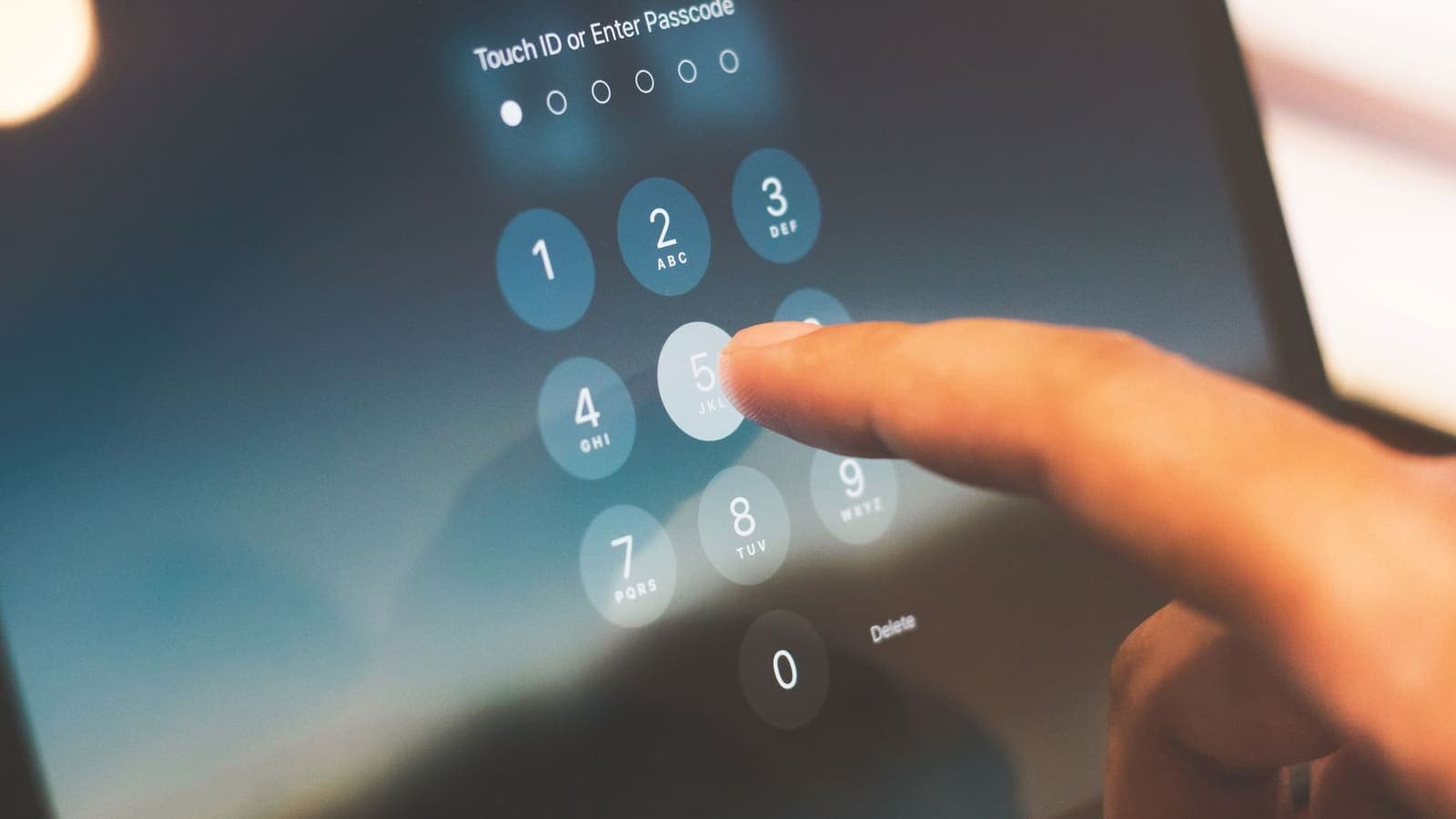
Where a VPN fits in your plan
Once you have your list, match controls to threats. A VPN is strong on a narrow set of problems.
| Threat | Useful controls |
|---|---|
| Snooping on shared or public networks | VPN, HTTPS, avoiding sensitive logins on unknown networks |
| Account takeover | Unique passwords, a password manager, two-factor authentication |
| Phishing | Checking links and senders, never entering credentials from a message link |
| Lost or stolen device | Screen lock, device encryption, remote wipe, backups |
| Tracking by sites | Browser privacy settings, tracker blocking, limiting logins |
| Outdated software | Prompt updates for the system, browser and apps |
A VPN also helps keep your network operator from seeing every site name you visit, but it does not stop an account you are logged into from recognising you. For the difference between hiding an address and being anonymous, see can a VPN make you anonymous.
Turn the model into a VPN choice
With your model in hand, the choice becomes a matter of fit.
- Is a VPN relevant? If your main risks are on untrusted networks or about your provider seeing your browsing, yes. If they are phishing or device theft, a VPN is secondary.
- How much do you trust the provider? Read what the provider publishes about its practices instead of relying on slogans. Be sceptical of absolute promises.
- What do you need it for? A VPN you will use on travel days differs from one you want running all day.
- Does it work on your devices? Check that the apps and connection methods cover the phones and computers you use.
- Can you stop easily? Some people prefer a fixed-term pass they buy only when needed rather than a service that renews automatically. Compare options in how to choose your first VPN.
Common mistakes
- Starting with the product. Choosing an app first and inventing reasons later.
- Treating a VPN as a force field. It protects one path, not your whole life online.
- Ignoring the basics. Reused passwords and no two-factor authentication create more risk than public Wi-Fi does.
- Copying someone else's model. A friend's risks may be very different from yours.
- Never updating the model. New jobs, trips and devices change your risks.
- Hiding illegal acts. A threat model is for privacy and safety, and the law still applies to everything you do.
Summary
A threat model is a short answer to five questions: what you protect, from whom, how likely the risk is, how bad it would be, and how much effort you will invest. Once you have it, a VPN becomes one tool with a clear job, typically protecting traffic on networks you do not control and limiting what your network operator sees. It leaves phishing, weak passwords, lost devices and tracking by accounts untouched. For people facing serious or targeted risks, a consumer VPN is not enough, and broader help such as the EFF guide is the right next step. Review your model whenever your situation changes.
If a VPN fits your model, you can see how a prepaid pass works.
Frequently asked questions
What is a threat model?
A threat model is a short written answer to a few questions: what you want to protect, who you want to protect it from, how likely a problem is, how bad it would be, and how much effort you will spend. It keeps your security choices proportionate.
Do I need a threat model to use a VPN?
No, but a few minutes of planning helps you choose and use a VPN sensibly. It shows whether a VPN fits your needs, which risks it leaves untouched and what else you should do alongside it.
Is a VPN enough for a journalist or activist?
A consumer VPN is one small layer. People facing serious, targeted risks need a broader plan, including secure accounts, device hygiene and often specialist support. The EFF Surveillance Self-Defense guide is a good starting point.
How often should I review my threat model?
Review it when your situation changes, such as a new job, a trip, a new device or a change in what you handle online, and otherwise once or twice a year. Threats and tools change over time.
Does a threat model help me avoid the law?
No. A threat model is for protecting your privacy and security from ordinary risks such as snooping, theft and account takeover. It is not a way to avoid legal obligations, and a VPN does not make illegal acts legal.
References
About the author

Bob Kanokphon Thongdee
- Founder of XPASS VPN
- Co-founder of eSIMonline.asia
- More than 7 years in online marketing
- Founder of Cojourney Visa and Cojourney Travel
Need a VPN for a short trip or a busy month?
XPASS sells prepaid passes for a set number of days. You pay once and nothing renews automatically.
See passesKeep reading

Privacy Guides
What a VPN Cannot Protect You From
A VPN secures the connection, not the person using it. This guide covers phishing, malware, ransomware, identity theft, data breaches, email privacy and other risks it cannot solve, and what to do about each.
9 min read

Privacy Guides
Can a VPN Make You Anonymous?
A VPN gives you more privacy on the network, but it does not make you anonymous. Here is the difference and what still identifies you online.
9 min read

Buying Guides
How to Choose Your First VPN
A step-by-step way to pick your first VPN: decide what you need it for, check device support and payment terms, read the policies, and test before relying on it.
8 min read

VPN Security
How to Stay Safer on Public Wi-Fi
Public Wi-Fi is not a disaster, but it is a network you do not control. Here are the real risks, the habits that matter most, and where a VPN fits in.
8 min read

Privacy Guides
What Is Two-Factor Authentication?
Two-factor authentication asks for a second proof of identity in addition to your password, so a stolen password alone is not enough. Here is how the main methods compare and how to start.
9 min read