
Post-Quantum VPN Encryption: What It Means for You
Quantum computing is often described in alarming terms. This guide explains what is actually at risk in VPN encryption, what post-quantum security means, and what ordinary users can sensibly do.
9 min readUpdated Oct 15, 2026By XPASS Editorial Team
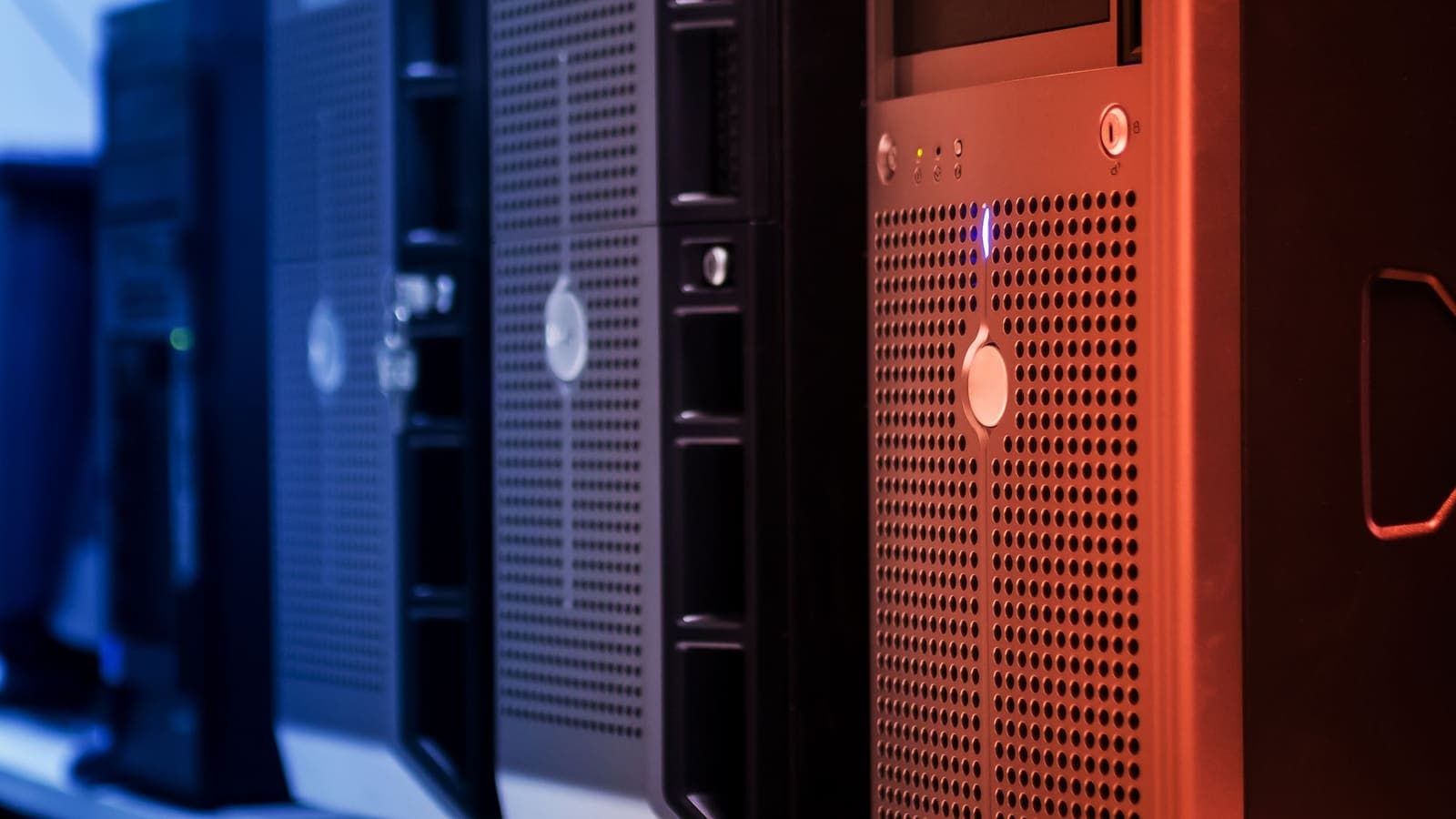
Quantum computing makes headlines, and VPN marketing has noticed. Phrases like quantum-proof or future-proof encryption now appear on sales pages, usually with very little explanation. If you have wondered whether your VPN is about to become useless, or whether you need to switch to something new, this article is for you.
The short version is calm: nothing about quantum computing means you should stop using a VPN today. But the topic is real, standards bodies are working on it, and some of it is worth understanding. This guide explains what post-quantum VPN encryption means, which parts of a VPN are actually affected, and what sensible, proportionate steps an everyday user can take. It is general education and makes no claim about the cryptography used by any particular service, including ours.
What "post-quantum" actually means
A conventional computer works with bits that are either 0 or 1. A quantum computer uses quantum bits whose behaviour allows certain mathematical problems to be solved in fundamentally different ways. For most everyday tasks, a quantum computer is not faster. For a small set of specific problems, however, a sufficiently large and reliable quantum machine could be dramatically faster than any ordinary computer.
Two of those problems matter for cryptography. One is breaking the maths behind most public-key systems, such as RSA and elliptic-curve cryptography. The other is speeding up brute-force search against symmetric keys, though only modestly.
Post-quantum cryptography (also called quantum-resistant cryptography) refers to algorithms designed to remain secure even against a large quantum computer. Importantly, these algorithms run on ordinary computers. They are not quantum technology; they are new mathematical constructions that are believed to be hard for both ordinary and quantum machines.
It is worth being plain about the present situation: as of today, no quantum computer is publicly known to be capable of breaking the encryption used on the internet. The concern is about preparing in time, because replacing cryptography across the world takes years.

Which parts of a VPN could be affected
A VPN connection is built from several cryptographic pieces. They do not face the same level of risk, so treating them separately avoids both panic and complacency. If you need a refresher on how these pieces fit together, what is VPN encryption covers the basics.
| Part of the connection | What it does | Quantum risk in general terms |
|---|---|---|
| Symmetric encryption of the data | Scrambles your traffic with a shared key | Lower. Larger key sizes are considered to hold up well |
| Key exchange | Lets the two ends agree on that shared key safely | Higher. Common public-key methods could be broken by a large quantum computer |
| Digital signatures and certificates | Prove who you are talking to | Higher in the long run, but harder to exploit retroactively |
| Hashing and integrity checks | Detect tampering | Lower. Longer outputs are considered sufficient |
The key point is that the bulk encryption of your data is not the weak spot. The weak spot is how the keys are agreed in the first place. If an attacker could work out the key exchange, they could derive the session keys and read the data, even though the data cipher itself was strong.
Harvest now, decrypt later
You may see this phrase and wonder why anyone would worry about a computer that does not exist yet. The logic is straightforward. An attacker with the capability to record large amounts of encrypted traffic could store it today. If quantum computers capable of breaking the key exchange arrive in future, the stored traffic could then be decrypted.
Whether this matters to you depends on how long your information needs to stay secret.
- Short-lived information is hardly affected. A video call about lunch, a passing web search or a delivery tracking page will not be worth anything in fifteen years.
- Long-lived information is where the concern is. Government secrets, health records, trade secrets, legal files and identity documents may need to stay confidential for decades.
Most people using a VPN on public Wi-Fi or while travelling are in the first category. Organisations that move sensitive data are in the second, which is why standards bodies and large institutions are the first to act. Even so, the sensible approach for an individual is to be aware, not alarmed.
How post-quantum cryptography works, in outline
The U.S. National Institute of Standards and Technology (NIST) has run a multi-year public process to select quantum-resistant algorithms, described on its post-quantum cryptography project page. It has published its first standards. One of them, FIPS 203, specifies a key-encapsulation mechanism known as ML-KEM, intended for establishing shared keys. Other standards cover digital signatures.
You do not need to understand the mathematics. Two ideas are enough.
- New hard problems. Instead of factoring large numbers or working with elliptic curves, the new schemes rely on different problems, such as ones based on structured lattices, that are not known to be easy for quantum computers.
- Hybrid approaches. Because new algorithms are young, many deployments combine a classical key exchange with a post-quantum one. The session key is derived from both. If one of them is later found to be weak, the other still protects the connection. Hybrid designs are already in use for some web connections, including those using TLS, the protocol described in RFC 8446.
Another point to keep in mind: new algorithms have trade-offs. Their keys and messages are usually larger than classical ones, which can add a little overhead to connection setup.
What VPN providers and protocols can do
A VPN protocol is a recipe made from the cryptographic pieces above. Protocol designers and providers have several ways to prepare, and it helps to know what they look like in general so you can read claims sensibly. For background on protocols, see what is a VPN protocol.
- Add a post-quantum key exchange. Combine a standardised quantum-resistant method with the existing classical one, in a hybrid. This protects the key agreement that is considered most exposed.
- Use pre-shared symmetric keys. Some protocols allow an additional secret key, shared in advance, to be mixed into the key derivation. The WireGuard whitepaper describes an optional pre-shared key feature, and discusses how it can add resistance if the public-key part were weakened. The catch is that distributing such keys safely is its own challenge, so it suits specific setups better than a mass-market service.
- Keep software updated. Cryptography changes over time. A provider that regularly updates its software and retires old algorithms is better prepared than one that never does.
- Plan for agility. Good systems are built so that algorithms can be swapped without redesigning everything.
- Be transparent. The most trustworthy way to talk about this is with documentation: which algorithms, in which protocol, since which version.
Comparing protocols in general terms is covered in WireGuard vs OpenVPN explained. Whether a given service has deployed any of the measures above is something that only that service can tell you.
How to read a post-quantum claim
Because the topic is fashionable, some of what you read will be thin. Ask these questions when you see a claim of quantum-proof or quantum-safe encryption.
- Which algorithm? A real claim names a standard or at least an algorithm family. Vague language is a warning.
- Where is it used? In the key exchange, in every protocol and on every platform, or in one experimental option?
- Is it hybrid? Combining classical and post-quantum methods is the cautious approach today.
- Is it on by default? A feature hidden in an advanced menu protects fewer people.
- Is there documentation or independent review? Look for technical write-ups rather than banners.
- Does the claim promise too much? Words like unbreakable, guaranteed or forever are marketing, not engineering. No one can guarantee how maths or machines will develop.
A short honest statement is worth more than a loud one. Something like we use a hybrid key exchange in these protocols, from this version, tells you much more than future-proof encryption.

What you can do as an everyday user
You do not need to configure cryptography yourself. A few habits matter more.
- Keep your operating system, browser and VPN app updated. Updates are how new cryptography reaches ordinary users.
- Prefer services that explain themselves. A provider that documents its protocols and how it handles updates is easier to trust.
- Think about how long your data needs protecting. If you handle information that must stay private for many years, such as certain professional records, take advice appropriate to your field. For everyday browsing, the risk is low.
- Do not rely on a VPN alone. Strong passwords, two-factor authentication and careful clicking protect you against far more common threats. Our guide on common VPN security myths puts this in perspective.
- Be sceptical of urgency. An advert that says you must switch now because of quantum computers is probably selling something.
A few scenarios
The traveller on hotel Wi-Fi. Maya reads emails and checks a map. The information is useful for minutes, not decades. Post-quantum questions are interesting to her but not decisive. A VPN that is up to date and a habit of checking for the padlock in the browser matter more.
The freelancer with client contracts. Lin sends documents that are confidential for a few years. She keeps her tools updated and asks her clients which security standards they expect. If a client requires specific cryptography, she follows their guidance.
The researcher with long-term records. Dr Somchai handles records that must stay private for decades. He should follow guidance from his institution or regulator, which will increasingly address post-quantum migration. A consumer VPN is only one small part of his setup.
Limits and what to watch for
- The timeline is uncertain. Nobody knows precisely when, or whether, a quantum computer large enough to break today's key exchange will exist. Preparing early is cautious, not a sign that the danger is imminent.
- Post-quantum is not perfect. New algorithms are young, and some candidates have been broken by classical attacks during the standardisation process. That is why hybrid designs are popular.
- Encryption is only one layer. Even perfect cryptography does not protect you from phishing, malware or leaking your own credentials. See what a VPN cannot protect you from.
- You cannot check a provider's implementation from outside. Documentation helps, but it is still the provider's own description.
- A VPN does not make you anonymous. Better encryption changes what a network eavesdropper can read, not who you are to the sites you log in to.
Summary
Post-quantum VPN encryption is about protecting the part of a VPN most exposed to future quantum computers: the key exchange that sets up the session keys. Bulk data encryption with long keys is considered much less at risk. Standards now exist, hybrid designs combine old and new methods, and the realistic concern is long-lived data recorded today. For most people the right response is calm: keep software updated, favour services that explain their security plainly, and question any quantum-proof marketing.
If you simply want a straightforward VPN pass with a fixed number of days and no automatic renewal, the pricing page explains how our passes work.
Frequently asked questions
What does post-quantum VPN encryption mean?
It means a VPN uses cryptography designed to stay secure even against a future large quantum computer. In practice this usually means adding a quantum-resistant method to the key exchange, often alongside a classical one, while the bulk encryption stays largely the same.
Can quantum computers break my VPN today?
No quantum computer today is known to be able to break the encryption used by modern VPNs. The concern is about the future, and about data that someone records now in order to try to decrypt it later.
Is AES encryption safe against quantum computers?
Symmetric ciphers such as AES with 256-bit keys are generally considered to hold up well. The larger concern is the public-key part that sets up the keys, which is the part post-quantum methods are designed to replace or supplement.
What is harvest now, decrypt later?
It describes an attacker who records encrypted traffic today and stores it, hoping to decrypt it once quantum computers exist. It matters mainly for information that must stay secret for many years.
Do I need a post-quantum VPN right now?
For most people there is no urgent need. Keep your devices and apps updated, prefer services that explain their security in plain terms, and treat any marketing claim about quantum-proof protection with the same questions you would ask about any other claim.
References
About the author

Bob Kanokphon Thongdee
- Founder of XPASS VPN
- Co-founder of eSIMonline.asia
- More than 7 years in online marketing
- Founder of Cojourney Visa and Cojourney Travel
Need a VPN for a short trip or a busy month?
XPASS sells prepaid passes for a set number of days. You pay once and nothing renews automatically.
See passesKeep reading

VPN Security
What Is VPN Encryption?
VPN encryption scrambles your data between your device and the VPN server. Here is how keys, ciphers and the handshake work, and what encryption cannot do.
10 min read

VPN Basics
What Is a VPN Protocol?
A VPN protocol sets the rules for how your device and a VPN server connect and protect traffic. Here is what that means in plain language, with the main trade-offs.
9 min read

VPN Security
WireGuard vs OpenVPN Explained
WireGuard and OpenVPN both build encrypted tunnels, but they differ in design, complexity and flexibility. Here is a plain comparison and how to think about the choice.
9 min read
Privacy Guides
Common VPN Security Myths
From 'VPNs make you anonymous' to 'HTTPS makes VPNs useless', here are the most common VPN myths and what is accurate about each.
9 min read

VPN Basics
How Does a VPN Work?
A step-by-step walk through what happens when you connect to a VPN and open a website: the handshake, the tunnel, the server and the return trip.
9 min read