
VPN Logging Policies Explained
A logging policy is not one yes-or-no promise. This guide separates connection logs from activity logs, explains retention and wording, and gives you questions to ask a provider.
9 min readUpdated Oct 15, 2026By XPASS Editorial Team
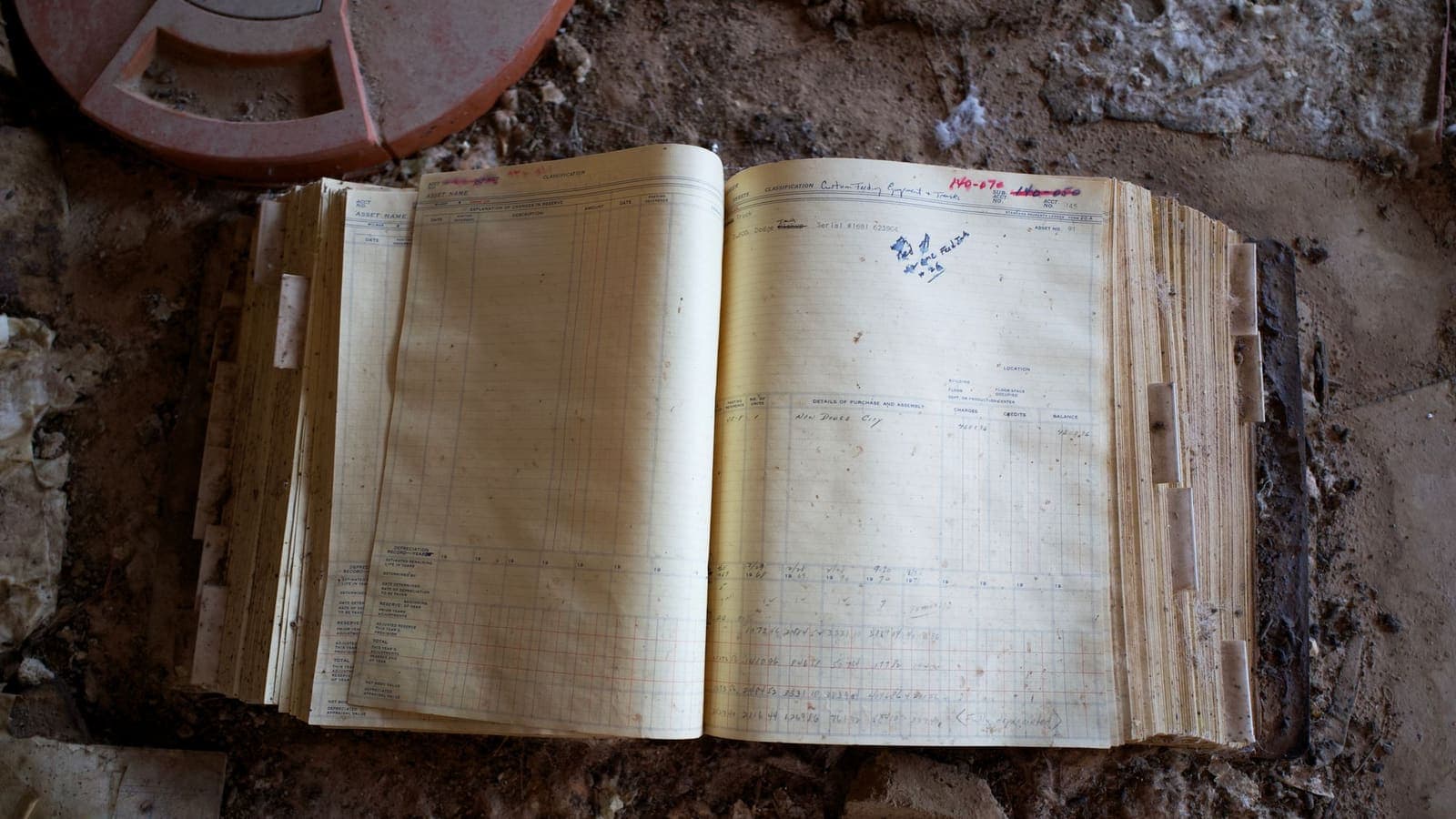
When people compare VPNs, the logging policy is often the first thing they look for. The question usually arrives as a single yes-or-no: does this provider keep logs? The honest answer is almost never a plain yes or no, because "logs" is a word that covers very different kinds of records, from a counter that disappears when you disconnect to a detailed list of every domain you opened.
This guide pulls the idea apart. You will see the main kinds of data a VPN service can hold, what each one could reveal, how long it might be kept, how to decode typical policy wording and which questions to put to a provider before you pay. It is a reading guide, not a verdict on any company, and it sits alongside our explanation of what a VPN provider can see, which looks at the same question from the technical side.
Why "does it keep logs?" is the wrong first question
A VPN service has to process your traffic in order to forward it. That means some information exists inside the system at least for a moment: the address you connect from, the session that is active, the data passing through. The useful question is not whether information exists, but four narrower ones.
- Which fields are written down? Is it a timestamp, an IP address, a domain, an account ID?
- Where are they stored? In memory that clears on restart, or in a database or file that persists?
- For how long? Minutes, days, months, indefinitely?
- Can they be linked to you? Can someone connect the record to your account, device or payment details?
A policy that answers all four is giving you real information. A policy that answers none of them, however confident its tone, is telling you very little. The Cloudflare introduction to VPNs describes the tunnel; the policy tells you what happens to the facts about that tunnel.

The four buckets of data
Most records fall into four groups. Providers often describe them with different names, so use this as a translation key.
| Bucket | Typical fields | What it can reveal | Sensitivity |
|---|---|---|---|
| Connection data (metadata) | Connect and disconnect times, your original IP address, the VPN address given to you, session length, amount of data transferred | When you were online and roughly where from; who was using a given VPN address at a given moment | Medium to high, especially when linked to an account |
| Activity data | Websites or domains visited, DNS queries, apps used, content of traffic | What you read, watch and search for; habits and interests | Very high |
| Operational and diagnostic data | Error reports, app version, device type, performance counters, crash logs | Technical details of your setup; can include identifiers if collection is careless | Low to medium |
| Account and payment data | Email address, username, order history, payment confirmation, support messages | Who you are in commercial terms, and how you pay | Medium to high |
The first two groups are the ones usually discussed when people say "logs." The distinction is worth remembering: connection data tells someone that a person used the service, while activity data tells them what the person did. Each could matter for different reasons.
Connection logs in more detail
A connection record can be as thin as a running count of active sessions with nothing saved after you leave, or as thick as a stored list of source addresses with timestamps. The risk is the combination. If a record says that VPN address X was in use from 14:02 to 14:47 and another record ties address X to your account, the two together say a lot about who connected, even without any record of browsing.
Activity logs in more detail
An activity record is the one most people mean when they worry. If it holds destination domains or full page addresses, it can build a map of your interests. Even a list of domains without the pages can be revealing, since a domain such as a clinic, a bank or a political site says something about you. Providers that state they do not record this kind of data usually say so in a dedicated sentence. If you cannot find such a sentence, the policy is not clear on the point.
Diagnostic data
Apps often collect crash reports and usage statistics to fix bugs. That is normal, but it should be described. Look for whether diagnostic data is tied to an account, whether analytics tools from other companies are included and whether you can switch it off. The Apple App Store privacy labels, described in Apple's App Privacy Details, are a useful cross-check for apps on iPhone: they list what categories of data an app says it collects and whether it is linked to you.
Retention: the time dimension
Two policies can list the same fields and still differ enormously because of retention.
- Live only. The data exists while the session is active and is discarded at disconnect. This is the least risky pattern.
- Short-term. The data is kept for hours or a few days, often for abuse handling or troubleshooting.
- Medium-term. Weeks or months, often tied to billing disputes or legal retention duties.
- Indefinite or unspecified. The policy never says. Treat this as the weakest answer.
Also look at what happens at the end of the period. Does the record get deleted, or aggregated into statistics, or kept in a backup? Backups are a common gap: a record deleted from the main system may live on in a copy for another month.
Decoding typical policy wording
Policy language is written by lawyers and marketers, and a small change of verb can change the meaning. The table uses invented sentences to show how to read them.
| Phrase you might see | What it may mean | What to ask |
|---|---|---|
| "We do not monitor your activity" | We may not be actively watching, but records could still exist | Do you store activity data at all? |
| "We do not store your browsing history" | Page-level history is not kept | Are domain names or DNS queries stored? |
| "We keep minimal logs" | Something is kept; "minimal" is not defined | Which fields and for how long? |
| "Anonymised or aggregated data may be retained" | Statistics are kept after removing direct identifiers | How is it anonymised, and can it be re-linked? |
| "To improve our services" | A broad purpose that can cover many uses | Which specific data is used? |
| "We may share data with trusted partners" | Third parties may receive something | Which categories, for what purpose? |
| "We comply with valid legal requests" | Data is released if lawfully requested and available | What data would exist to release? |
| "We do not sell your personal data" | No direct sale | Is it shared or used for advertising in other ways? |
No single phrase is bad by itself. What matters is whether the policy gives enough detail to test the claim. A good policy names fields, durations and purposes. A weak one stays at the level of reassurance.
Why some providers keep some data
It helps to be fair about the reasons, because they explain what to expect.
- Billing and accounts. The provider must know who has paid and for how many days. That is account data, not browsing data.
- Abuse prevention. Services protect themselves from spam, attacks and misuse of their network, which can require short-lived records.
- Troubleshooting. When you report a problem, support may need connection details from a specific session.
- Limiting sessions. If a service restricts how many devices an account can use at once, it needs to know about current sessions, even if it discards that information later.
- Legal duties. Some jurisdictions require certain business records.
A provider that keeps a short, narrow record for a clear reason and says so is behaving more transparently than one that makes a sweeping claim and offers no details. For how the provider's location affects what it can be asked to hand over, see VPN jurisdiction explained.
Legal requests and the limits of a policy
Providers may receive requests from authorities, and what they can hand over depends on what they hold. If a record does not exist, it cannot be produced, which is why retention details matter. Which authorities can ask, under what process, and what the provider must disclose differs by country, and none of it is something this article can advise on. If you are in a situation where this matters, speak to a qualified lawyer.
A policy also has limits you should accept honestly.
- It is a statement, not a technical proof. You cannot inspect the servers.
- It covers the provider's service, not your own device, network or internet provider, which have their own records. The article on being tracked with a VPN covers what remains visible.
- It does not cover third-party tools inside an app, such as analytics libraries, unless the policy mentions them.
- It can change. Check the date and whether the provider announces changes.
- It cannot make you anonymous. Accounts, cookies and payment details still identify you.

A reader's checklist: ten questions to ask
Use these when comparing providers, or when writing to support.
- Which connection data is stored, if any, and which fields?
- Do you store any record of the sites, domains or DNS queries I use?
- How long is each type of data kept?
- Is any data kept only in memory, and cleared on restart?
- Can the stored data be linked to my account or payment?
- What diagnostic or analytics tools are in the app, and who runs them?
- What data do you share with third parties, and why?
- What happens to data in backups?
- What have you done when asked for user data in the past, and do you publish such reports?
- When was the policy last updated, and how will I be told of changes?
A reply that is specific, dated and consistent with the written policy is encouraging. A reply that repeats marketing phrases is a signal to look elsewhere. Our provider comparison scorecard shows how to put the answers into a table.
Three scenarios
A student comparing three plans. Ravi reads all three policies side by side. Two promise "complete privacy" without a single field named. The third lists what it stores for billing, says that connection records are kept for a stated number of days and names the diagnostic tools in its app. He picks the third because he can test its claims, not because it promises the most.
A remote worker with a client contract. Elena handles confidential documents. She is less worried about marketing language than about retention and sharing, so she writes to support with questions 3, 7 and 8. She keeps the reply with her records and chooses the provider whose answer matches its published policy.
A traveller on a short trip. Kenji does not need a perfect policy. He wants something that explains what is stored, lets him pay without a long commitment and ends on its own. He reads the retention section and the data-sharing section, which is enough for a short trip.
Common mistakes
- Treating one reassuring phrase as a full policy.
- Confusing "we do not sell your data" with "we do not collect your data."
- Ignoring the retention period and the backup question.
- Reading the privacy policy of the website but not the one for the app.
- Assuming a policy proves what the servers do.
- Overlooking account and payment data because it is not "browsing."
- Believing that any logging policy makes you anonymous.
Summary
A VPN logging policy describes four groups of data: connection records, activity records, diagnostics and account data, and each can be kept for different lengths of time and linked to you or not. The useful questions are which fields are written down, where they are stored, for how long and whether they connect to your identity. Read for specifics, not slogans, remember that a policy is a statement rather than proof, and ask the provider directly if the text is vague.
If a prepaid pass with a fixed number of days fits your needs, the pricing page is there when you want to compare options.
Frequently asked questions
What is the difference between a connection log and an activity log?
A connection log records facts about the session itself, such as when you connected, for how long and from which address. An activity log records what you did during the session, such as the sites or domains you visited. Activity logs reveal far more about your habits, so they matter most.
Does a provider need any logs at all to run a VPN?
It needs some live information while you are connected, such as which session is active. Whether it writes any of that to storage, and for how long, is a separate decision. Providers keep different amounts for billing, abuse handling and troubleshooting.
What does temporary or anonymised data mean in a policy?
Those words have no fixed meaning. Look for the actual fields, the retention period in hours or days, and whether the data can be linked back to your account. A policy that uses the words without those details is vague.
Can a provider hand over data it does not store?
A provider can generally only hand over what it has. This is why the retention details in a policy matter. Which authorities can ask, and how, depends on the provider's jurisdiction and your own, and this article is not legal advice.
How can I check whether a provider follows its own logging policy?
You usually cannot check it directly. You can read for specifics, look for independent verification, review the provider's track record when it was asked for data, and treat the policy as a statement of intent rather than a technical guarantee.
References
About the author

Bob Kanokphon Thongdee
- Founder of XPASS VPN
- Co-founder of eSIMonline.asia
- More than 7 years in online marketing
- Founder of Cojourney Visa and Cojourney Travel
Need a VPN for a short trip or a busy month?
XPASS sells prepaid passes for a set number of days. You pay once and nothing renews automatically.
See passesKeep reading

Privacy Guides
What Can a VPN Provider See About You?
A VPN does not remove trust, it relocates it. Here is what a VPN provider can technically see about your account, your payment, your connections and your traffic, and how to judge a provider.
9 min read

Buying Guides
How to Compare VPN Providers: A Privacy and Transparency Scorecard
Rankings tell you what someone else values. This scorecard lets you compare any two VPN providers on privacy and transparency using evidence you can check yourself.
9 min read

Privacy Guides
VPN Jurisdiction Explained: What Five Eyes and 14 Eyes Mean
VPN jurisdiction is the set of laws a provider operates under. Here is what Five Eyes and 14 Eyes actually mean, what they do not prove, and how to weigh them against everything else.
9 min read

Privacy Guides
Can You Be Tracked With a VPN?
Yes, you can still be tracked with a VPN. Cookies, fingerprints, location services, ad IDs and your own accounts keep working. Here is what a VPN changes and what it does not.
10 min read

Privacy Guides
What Is a No-Logs VPN? How to Read a Logging Policy
A no-logs claim sounds simple, but it can mean very different things. Learn the types of logs, how to read a logging policy, and what audits and transparency reports do and do not prove.
9 min read